

Anyone who’s seen a John Wick movie or Taken knows that vigilante action-thrillers can be fun and cathartic. But as Jamelle Bouie writes, Uwe Boll’s latest film, Citizen Vigilante, fails even at its meager ambition to be a satisfying right-wing revenge fantasy. It’s a grotesque xenophobic snuff film in which disgraced former A-lister Armie Hammer murders immigrant criminals, as well as their innocent relatives, law enforcement officers, and even people who cut him off in traffic.
Boll’s never been a good filmmaker, but he has always been a skillful producer with a knack for finding ways to finance movies and cultural trends to exploit.
In recent years, the director declared that he was a progressive Bernie Sanders supporter. Now he’s promoting this terrible film by embracing Great Replacement rhetoric on right-wing—and even white nationalist—podcasts.
I followed Boll closely two decades ago, when I was a journalist on the video game beat. Back then, Boll was best known for cranking out atrocious film adaptations of games. The unrelenting awfulness of his output turned him into a punchline in online forums.
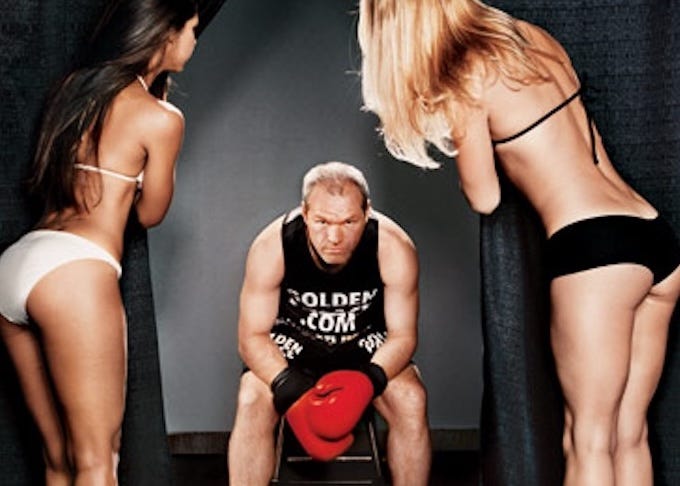
In 2006, Boll responded to all that derision by challenging his critics to face him in the boxing ring. I went to Vancouver with the brilliant photographer Gregg Segal to cover the resulting spectacle for Wired.
Twenty years ago, I thought I was covering one of the strangest publicity stunts the film industry had ever produced. Looking back, I think I was watching an early version of an Internet-age self-promotion strategy that has since become commonplace. Boll understood that if you can’t win admiration, hatred can be almost as valuable. Manufacture outrage, cast yourself as the victim of your critics, and turn the resulting attention into publicity.
What made the boxing stunt so dreadful was that Boll cherry-picked opponents with no experience in the ring. One writer volunteered to take part, but was deliberately excluded because he might actually have been able to defend himself. This wasn’t a sporting event. It was a lopsided thrashing, and humiliation was the point.
Only when Boll’s opponents were signing medical and legal waivers did some of them seem to grasp what they had agreed to: Boll was a trained boxer; this wasn’t staged violence like WWE; and the filmmaker who called himself “The Teutonic Terror” fully intended to beat them up.
Even now, I can’t quite believe this happened. Boll convinced several strangers to fly to another country so he could punch them in the face before a cheering crowd, recruited a corporate sponsor to finance the spectacle, and turned journalists—including me—into unsuspecting marks, generating a mountain of free media attention.
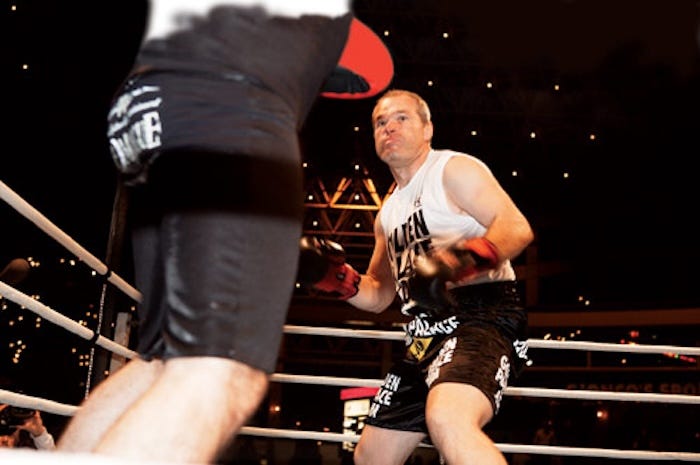
All four opponents actually climbed into the ring, despite never having boxed before. Well, one had taken boxing lessons for a few months. He was also 17 years old. His mom accompanied him to the fight.
I have a lot of regrets about the piece I wrote. I’d pitched it to my bosses as a laff riot, and I tried to delivered that, poking fun at Boll’s hapless victims while only hinting at how sickening and immoral I found the spectacle.
The full piece is reprinted below, followed by an addendum about what became of Boll's four opponents.
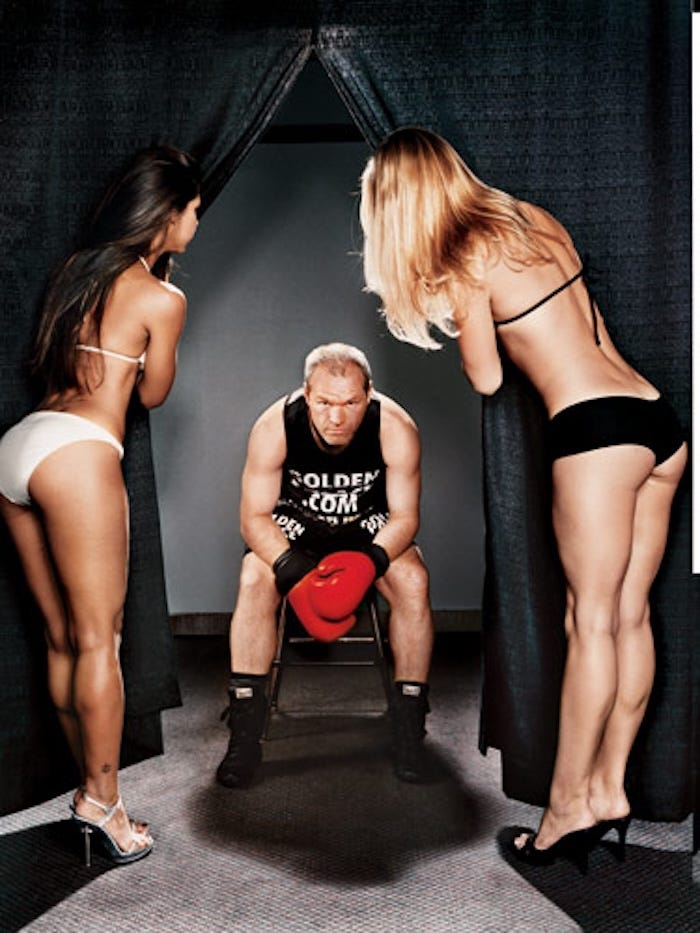
Raging Boll
What do you do if you’re the world’s worst director? You challenge your critics to a boxing match. How Uwe Boll fulfilled every filmmaker’s deepest fantasy. — by Chris Baker
Wired Magazine, December 2006
INSIDE A DILAPIDATED Vancouver casino, Uwe Boll dances around a makeshift dressing room, showboating for the crowd of reporters gathered in front of him. His bulldog face is creased with rage as he leans his meaty body into a vicious right hook, pounding at a pair of punching pads with a thunderous wham-wham!
“Oo-vuh! Oo-vuh! Oo-vuh!” A few steps away, at the rundown Plaza of Nations amphitheater, the chanting has begun as hundreds of rowdy spectators grow increasingly bloodthirsty. In a few minutes they – along with thousands of Internet geeks glued to streaming video feeds – will witness a bizarre spectacle. Uwe Boll, quite possibly the worst filmmaker in the world, will step into a boxing ring to defend his honor – and his livelihood – by beating the crap out of a handful of Web critics he claims are destroying his career.
Those unfamiliar with the name Uwe Boll are probably not in the bittersweet spot of the 41-year-old German director’s target demographic: 18- to 24-year-old gamers and horror film buffs. Boll specializes in ultra-violent adaptations of best-selling videogames, and in the past four years, the director has churned out three such films. He has three more in the pipeline, including his latest production, an adaptation of the serial killer sim Postal, featuring Michael Paré (the puppy-eyed star of ’80s B-movie Eddie and the Cruisers) and Verne “Mini Me” Troyer.
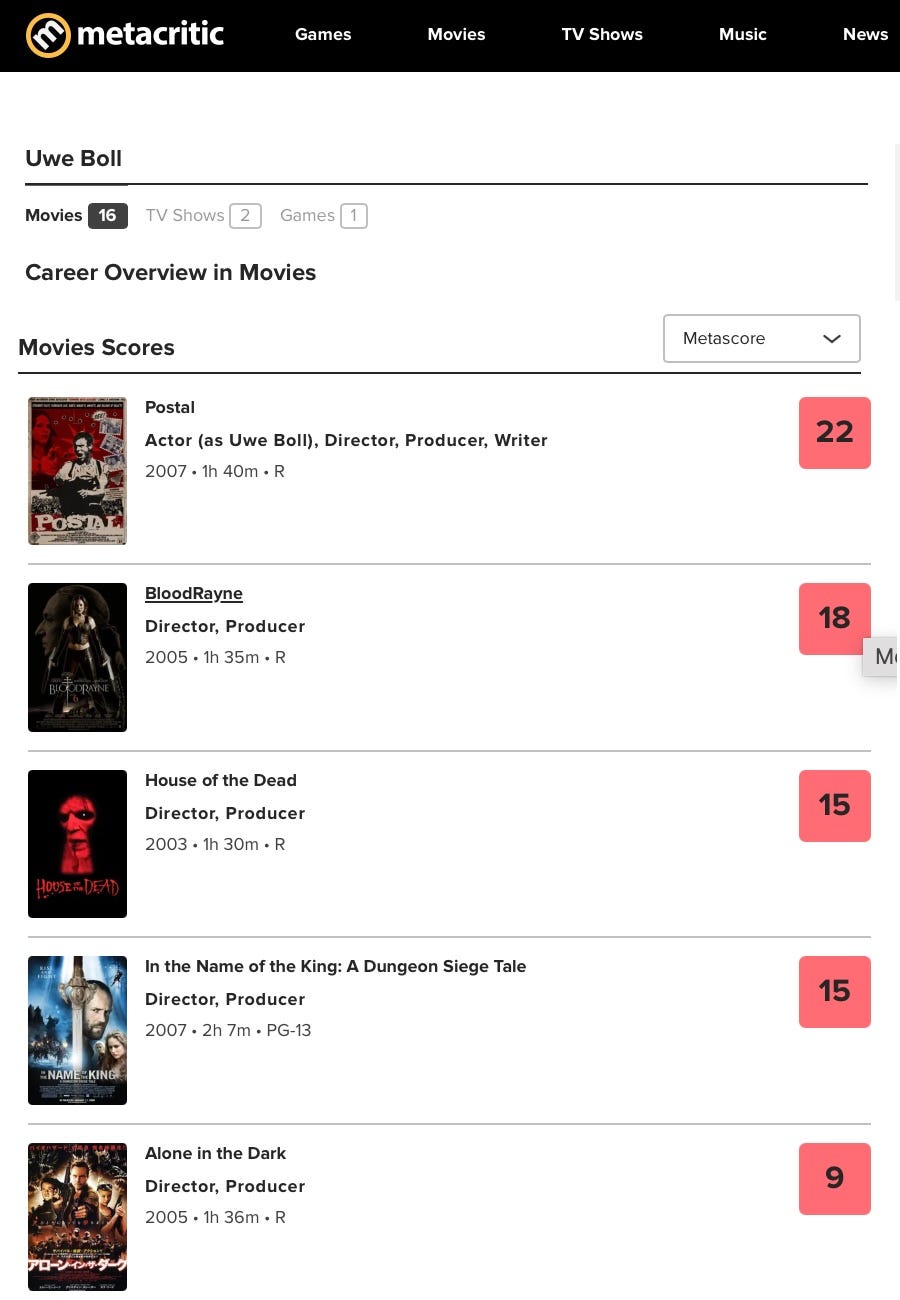
Boll’s specialty is optioning gaming franchises with built-in name recognition, then somehow managing to snag high-profile actors. (Sir Ben Kingsley inexplicably pops up as a vampire overlord in Boll’s last film, BloodRayne, and Ray Liotta and Burt Reynolds will appear in his big-screen version of the PC game Dungeon Siege.) He is also a savvy businessman. His production company, Boll KG, exploits a German tax loophole, so even when he films an English-language movie in Canada (as he did with Postal), his financiers get a fat write-off from the German government.
Like a modern-day Ed Wood, or a poor man’s Michael Bay, Boll appears competent in every aspect of filmmaking except the actual making of the film. His movies are haphazardly scripted, sloppily edited, badly acted and, most crucially, brutally received. Out of 350,000-plus films rated by users of the encyclopedic movie site Internet Movie Database, Boll’s three game flicks all rank in the bottom 100. Critics, especially the legion of armchair Eberts who post scathing reviews on the Web, have made a sport out of beating up the director. “Boll is destroying the childhoods and fond gaming memories of Internet nerds across the country with each and every cinematic bastardization he produces,” grouses the lowbrow Web site Something Awful. “He’s a taint on the genre film community!” thunders Ain’t It Cool News. One angry viewer purchased uweboll.com and posted a single-line entreaty: “Please stop making movies.”
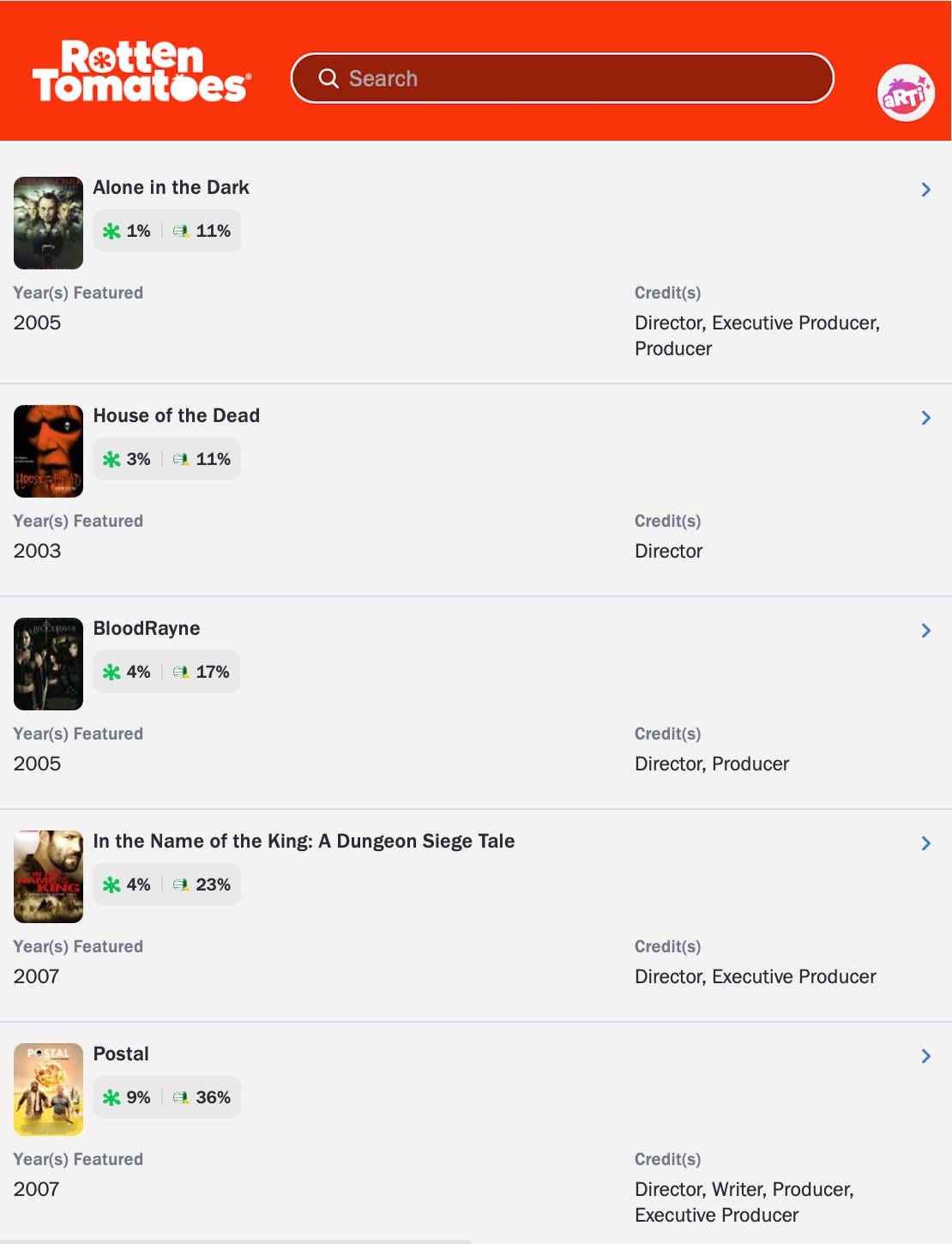
It’s telling that Boll’s target audience hates him the most. Gamers feel he has no love or respect for the source material — he uproots the story lines and locales of virtual worlds they’ve explored obsessively. (In BloodRayne he switched the setting from Nazi Germany to 18th-century Romania, with incoherent results.) Horror fans, too, are appalled by Boll’s contempt for their beloved genre – he even dismisses his own big-screen adaptation of the gruesome game The House of the Dead with: “It’s just a zombie movie. What are they expecting, Schindler’s List?”
In spite of this bluster, Boll feels victimized by the message boards. “I’m so pissed with all these Internet geeks hiding behind nicknames saying they want to kick my ass,” he says in his thick-as-knockwurst accent as he laces up his boots. But it’s not just his ego that’s suffering. He suspects all the bad Internet buzz has played a role in his steadily declining box office. House of the Dead (2003) cost $7 million and grossed $10 million in US theaters. But Alone in the Dark (2005) cost $20 million and grossed just over $5 million domestically. His last film, BloodRayne (2005), had a $25 million budget and tanked at less than $2.5 million. Each movie has a smaller opening weekend than the last and commands less shelf space at Blockbuster.
Anyone who’d ever slammed Boll’s work was invited to fight him. Not surprisingly, faceless keyboard jockeys like TylerDurden52, Adultswimlover2, and GunnerySergeantNumbnuts demurred.
Last June, Boll decided he’d had enough. A onetime amateur boxer, he decided to challenge his critics to a fight. He issued a press release that was quickly posted and reposted on nearly every gaming and movie site on the Web: “If critics want to bring Uwe Boll down,” it read, “here is their chance to physically bring him down and have the entire world watch them do it.”
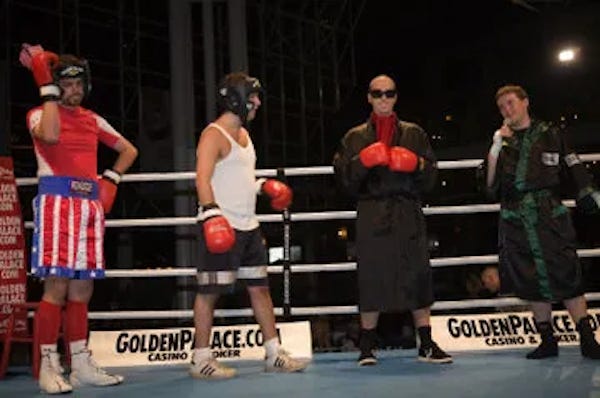
Anyone who had ever slammed Boll’s work was invited to participate, though he singled out several forum posters he particularly wanted to trounce. Not surprisingly, none of the faceless keyboard jockeys with Web handles like TylerDurden52, Adultswimlover2, and GunnerySergeantNumbnuts responded to the director’s offer. But four courageous – or is it crazy? – souls stepped forward for the Vancouver bout, united in their quest to bring down the talentless hack, once and for all.

SPORTING THICK GOLD MEDALLIONS and a navy blue track suit stretched over his once hunky, now chunky torso, Paré steps into the ring and switches on the mic. Tonight, the actor is playing the role of emcee: “Uwe Boll has thrown down the gauntlet, and these four men have bravely picked it up!” he booms. He thumbs through his cue cards: “The first challenger, webmaster and CEO of Something Awful, Richard ’Lowtax’ Kyanka!”
The crowd roars as Kyanka, a gawky 30-year-old from Lee’s Summit, Missouri, traipses around the ring in baggy stars-and-stripes shorts, knee-high tube socks, and a skintight shirt that showcases his muscle-free physique. Consistent with the tasteless humor of his site, Kyanka quickly draws boos by waving tiny American flags and accusing the Canadian crowd of “harboring a known terrorist – Uwe Boll!”
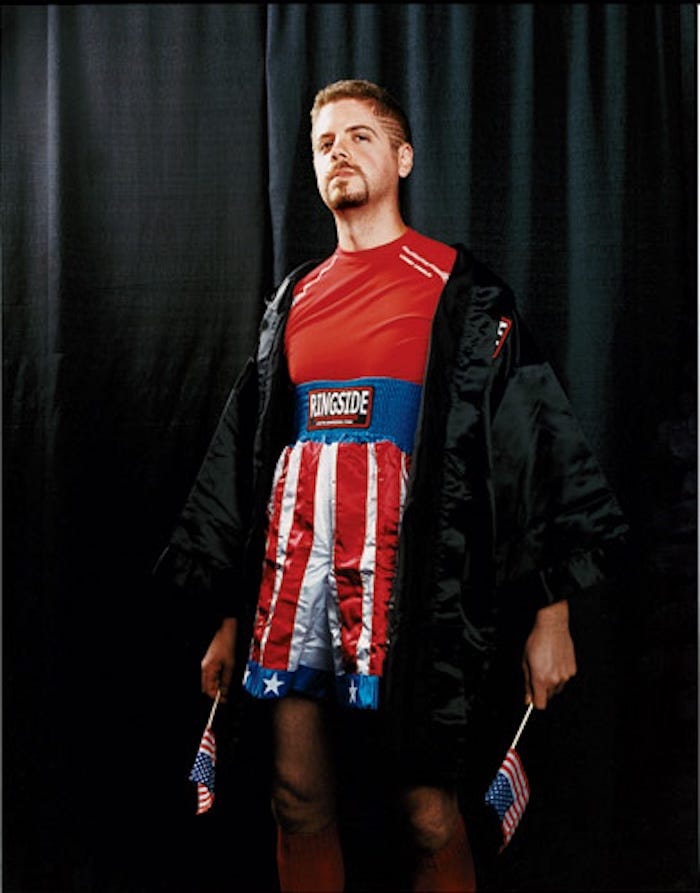
Kyanka lifted the Lowtax nom de guerre from a Tennessee politician who murdered his opponent during a 1998 state senate election. Earlier this evening, he joked about the medical waiver Boll’s people made him sign, obviously assuming this whole event would be a pain-free publicity stunt. (“It says that if he gives me AIDS or brain damage or kills me, I can’t sue him,” he smirked. “But it didn’t say anything about me giving AIDS to him, so I’ve been out sleeping with male hookers.”) But as his moment in the ring draws closer, his jokes become more panicky and desperate. “If he gives me brain damage, my webmastering days are over!” he whimpers. “Somebody please teach me how to fight!”
Boll lets his foe dance around for 15 seconds and then raps him on the side of the head. Kyanka drops abruptly, like a joke cut off before the punch line.
A sternum-rattling blast of German metal band Rammstein announces the arrival of Boll, self-dubbed the Teutonic Terror. He stomps down the aisle in tempo with the dirgelike beat and slowly climbs into the ring. The crowd – which includes many members of the director’s cast and crew — erupts, with, “Uwe, boma ye! Uwe, boma ye!“ Boma ye means “kill him” — a refrain chanted at the legendary 1974 Muhammad Ali-George Foreman fight in Zaire.
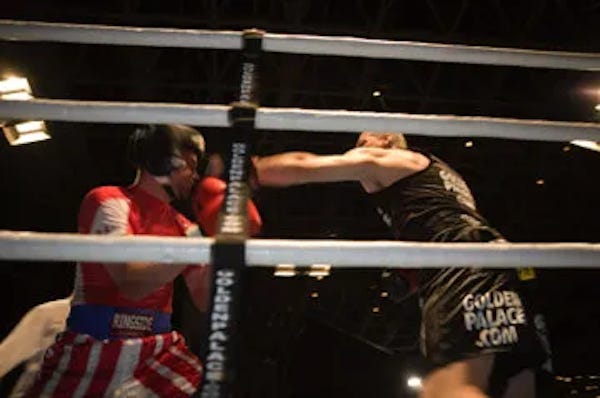
The bell sounds, and Kyanka circles Boll, waving his fists with cartoony exaggeration. The stone-faced director, who has been training for this evening for four months, lets his foe dance around for 15 seconds and then raps him on the side of the head. Kyanka drops abruptly, like a joke cut off before the punch line.
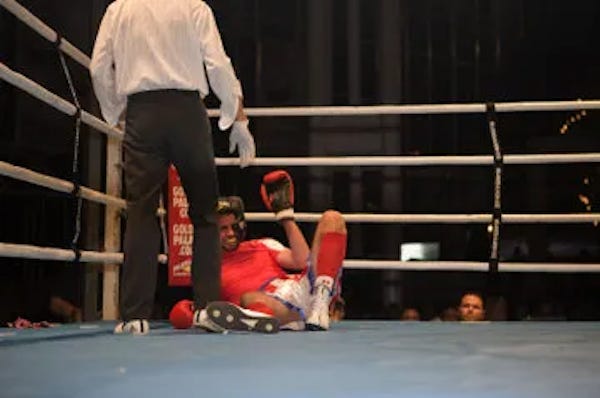
But he’s back up in a flash and taking another trip around the ring before Boll surges forward with a left to the body, then a right to the head. The webmaster crashes faster than an overloaded server. “You hit me in the face!” he says, glaring up at Boll. He climbs to his feet and prolongs the match by yo-yoing to his knees whenever the eager director threatens to take another crack at him. But Boll catches him off guard and hammers him with three solid punches. Kyanka sinks to the mat and stays there as the ref counts to 10. The fight is over in less than two minutes.

“Our second con-test-aaaant,” Paré hollers during introductions. “Film critic for Ain’t It Cool News … Jeff Sneideerrrr!”
“I’ve never been in the ring,” Sneider confessed before the match. “I’m a smoker. I have asthma. I don’t jog. I hope he goes easy on me.”
Sneider, a 22-year-old with a lingering padding of baby fat, enters the ring in a white undershirt with HI MOM hand-painted on the back. He stands on a corner buckle and waves his fists above his head like a pro wrestler. The crowd roars.
“I’ve never been in the ring,” he confessed before the match. “I’m a smoker. I have asthma. I don’t jog. I can’t have sex for more than five minutes at a stretch.” Ain’t It Cool News readers know Sneider as “MiraJeff” – a Web handle that’s a mashup of his own name and that of his favorite film studio, Miramax. An audience of nearly half a million a month sees his reviews on the site.
MiraJeff has never reviewed a Boll film. Sneider figures the director allowed him to participate because he wanted to beat up someone from Ain’t It Cool News, a fount of Boll-bashing. The site’s famously oversize founder, Harry Knowles, well exceeded the 190-pound weight limit and was therefore not an option. “I’m the highest-profile target,” Sneider says. “I hope he goes easy on me. I consider myself fairly good-looking, and I don’t want to ruin that.”
Ding! Boll begins to size up his opponent. The director is calm, slow, and cautious, conserving his energy. After all, he has two more geeks to slay tonight. Sneider races around the ring, flinging a few punches that Boll easily dodges. Despite a terrible habit of twisting away from blows so they catch him in the small of the back, Sneider makes it to round two.
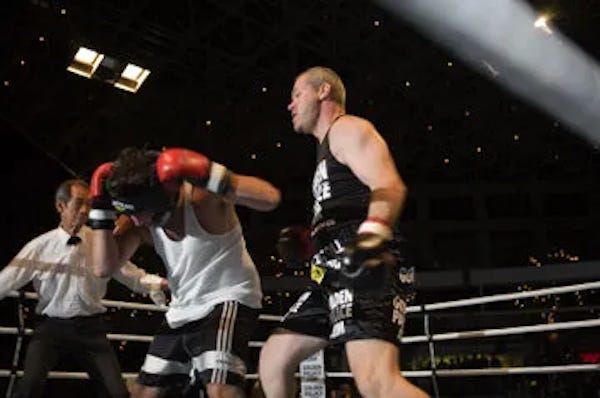
Sneider and Boll square off again. “Harry Knowles!” Paré shouts, goading Boll from ringside. Boll charges Sneider, a fist falling down on him like an Acme anvil. MiraJeff goes down twice before his cornerman throws in the towel.
DURING INTERMISSION, Kyanka does an interview with streaming site Wavelit. He’s trying to be self-deprecating – he knows the matches will live forever on YouTube – but is too furious to laugh it all off. “He said he wouldn’t hit me really hard!” Lowtax fumes, rubbing his head. “I hate him as a human being! This event is a combination of PR and BS!”

Meanwhile, Sneider is taking advantage of the country’s socialized health care. As two EMS workers tend to him, he occasionally removes his oxygen mask to vomit. As the intermission ends, the director emerges from the dressing room, looking serene. Kyanka points to Sneider’s sickly puddle. “Look what you did!” he snaps. Boll glances back, bemused. “It was boxing,” he deadpans. “Not chess.”
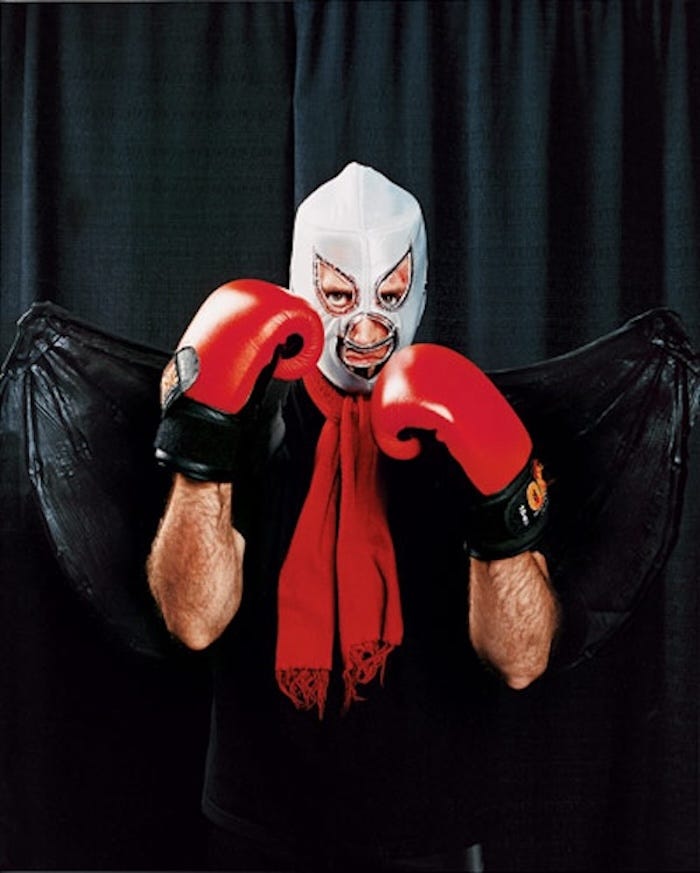
CHRIS ALEXANDER DOESN’T have a Web handle. He’s a 32-year-old Toronto writer for Rue Morgue, a magazine for horror aficionados. “These other guys, it’s like they crawled out of their mom’s basement,” he says. “They’re Web nerds; they thought this was a complete gag.” Then he dons a pair of black rubber bat wings, a set of plastic fangs, and a silver lucha libre mask. The critic’s strategy tonight seems to involve maintaining a consistent ironic distance from Boll’s fists.
Alexander’s strategy seems to involve maintaining a consistent ironic distance from Boll’s fists.
Alexander jumped at the chance to face off against the man whose films he loves to hate. “This boxing thing is a brilliant gambit,” Alexander says. “Boll knew he was destined for straight-to-video or the cable TV ghetto if he didn’t do something crazy.”
Judging by the five-man video crew following him as he enters the ring, Alexander is no stranger to savvy self-promotion. He’s making a documentary about this spectacle in hopes of entering the 2007 Fantasia International Film Festival next summer in Montreal. He takes the mic for a quick taunt before his fight and delivers an Oscar-worthy performance.
“You’ve heard of the Rumble in the Jungle, the Thrilla in Manila?” he rants, striding around the ring. “Well, kiddies, this here be the Maneuver in Vancouver!’ We’re gonna put him to bed for House of the Dead! We’re gonna feed him to the sharks for Alone in the Dark! He’s gonna be feeling pain for making BloodRayne!”
It will make good material for the documentary, but not a happy ending for Alexander. Boll delivers a vicious right to the eye, and Alexander soon sports some real blood to go with the fake stuff. After taking a few more blows to the skull, Alexander calls it quits, giving a theatrical bow before making a stiff exit.
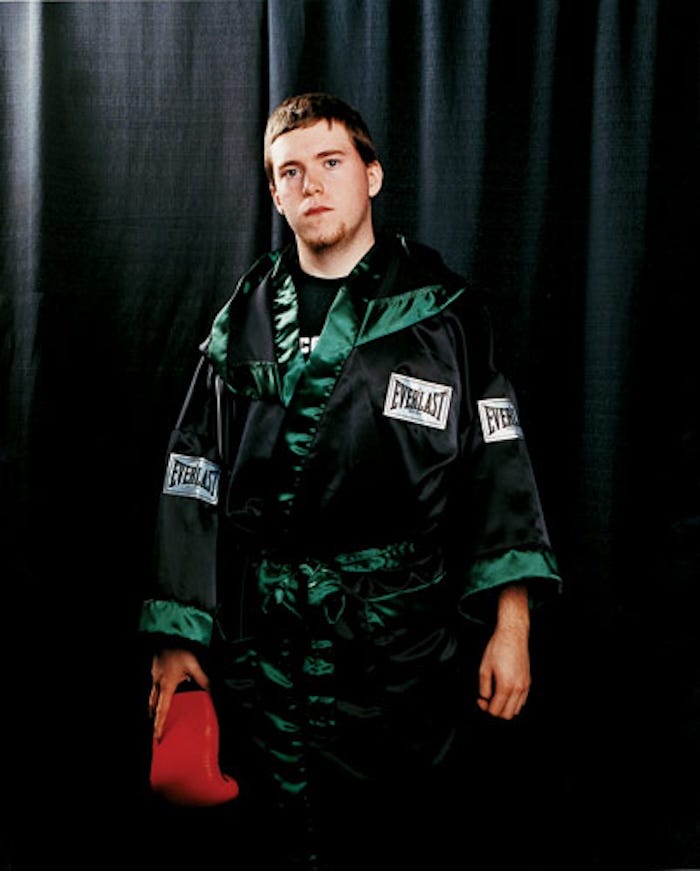
Boll’s fourth opponent is Chance Minter, a 17-year-old cinephile from Frederick, Maryland. Before the fight, Minter got pumped up by listening to the theme song from Conan the Barbarian on his iPod. “Boll’s really wild, more of a brawler than a fighter,” he says. “His jab is weak. He tries to get close so he can swing wide. I’m just gonna go out there and do my thing.”
The 17-year-old Minter has six months of boxing experience, rendering him the most formidable challenger of the night.
Minter had never written anything – bad or good – about the director when he asked to take part in the challenge. Nonetheless, Boll waived the rules and let him in. Minter has six months of boxing experience, rendering him the most formidable challenger of the night. (Meanwhile, the sponsor of the event, online gambling site GoldenPalace.com, has been desperately trying to convince Minter to drop out, wary of being associated with an event that involves pummeling a minor.)
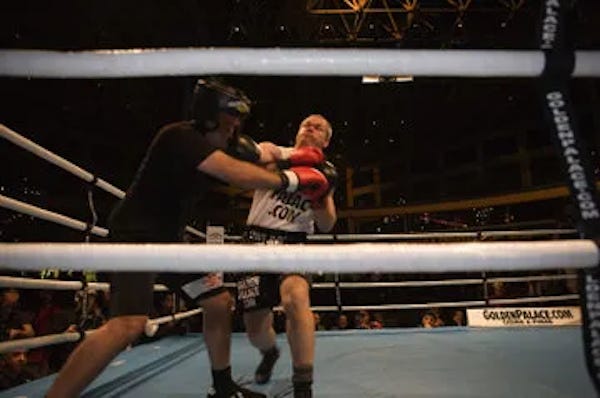
The final fight begins. Boll is ferocious, maybe because his opponent has a modicum of fighting experience or maybe because he no longer needs to hold anything in reserve. Minter gets in a few good shots, but then seizes up. He stops moving and keeps his hands locked in front of his face. Boll goes to work on the teenager’s unprotected rib cage and kidneys.

“Move around, Chance! Hit back!” shrieks Minter’s mom, who accompanied him to Vancouver. As the Teutonic Terror doles out dozens of punishing body blows, a line from Conan comes to mind. It’s the scene where a loincloth-wearing Arnold Schwarzenegger describes every barbarian’s raison d’être: “to crush your enemies, see them driven before you, and to hear the lamentations of the women!”
The director howls a characteristically incoherent victory cry: “So bad prepared are the critics in the rings, they are also at writing — fucking critics!”
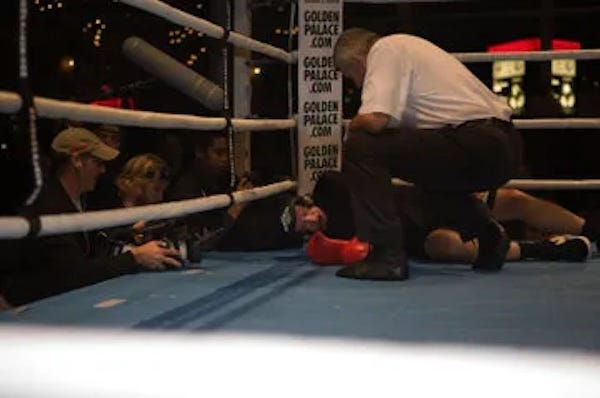
Minter’s mom rushes to the ring to stop the fight, but it’s already over – Minter’s cornerman has intervened. She leans against the ropes, head in hands, as Paré declares Boll the winner by technical knockout.
The director grabs the microphone. He is a bit red in the face, but triumphant. He has managed to pull off a craven publicity stunt while fulfilling the ultimate fantasy of every spurned movie director. “The lesson is: So bad prepared are the critics in the rings, they are also at writing,” he howls. “Fucking critics!”
But did he succeed in teaching his “critics” a lesson?
Oddly, yes.
Minter takes the mic and says, “He’s a great guy who makes great movies, and all the people who say they hate him don’t know what they’re talking about.” Even Alexander sheepishly concedes, “I’ve developed a sick admiration for him.” Later, he says, “Boll makes movies his way, without the aid of the studio system. Of course he’s yet to make anything decent, but I’m rooting for the crazy son of a bitch!”
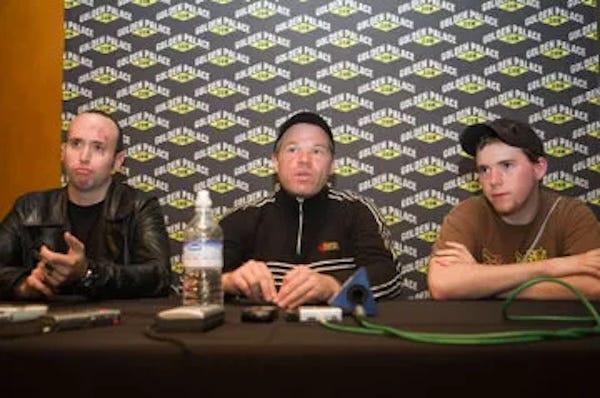
“I hit them so hard, they have brain damage,” Boll crows. “They love my movies now!” (Three of his foes even jumped at the chance to do unpaid cameos in his film Postal – as trailer trash.) A journalist asks if he’ll ever challenge his critics to another match. “It is not necessary,” says the Teutonic Terror. “Jean-Claude Van Damme is next. He’s a poseur.”
With that, the Maneuver in Vancouver is over. It was a crass and cynical spectacle, poorly planned and maddeningly chaotic, full of gratuitous violence, unintentional hilarity, and shameless posturing. An event that made you feel sad and angry, even as you laughed. In other words, it was a typical Uwe Boll production.
AFTERWORD: WHERE ARE THEY NOW
Chris Alexander went on to become editor in chief of Fangoria, the Cahiers du Cinéma of grisly cinematic carnage. He also directed several horror films of his own, recorded atmospheric scores and albums, and wrote several books about cinema, including a must-read about Roger Corman’s amazing cycle of Edgar Allan Poe films.
Jeff Sneider went on to write for Variety, Mashable, Collider, and TheWrap. He now runs The InSneider newsletter, which continues to be a film industry scoop factory.
Chance Minter went on to work on several of Boll’s films and started his own production company in Los Angeles.
Richard Charles “LowTax” Kyanka ended his involvement with the site Something Awful in 2020 amid allegations of domestic abuse. Soon after, he was banned from the site that he’d created in 1999. Tragically, he ended his own life the following year.
The photographer Gregg Segal went on to capture indelible images for scores of publications. His 2019 release Daily Bread: What Kids Eat Around the World was named one of the best photography books of the year. He may be best known to gamers for this timeless cover photo of VR pioneer Palmer Luckey for Time magazine.