

Pokémon Go exposed America's bad level design
On the game's 10th anniversary, I explain why the play experience sucks in suburbs and rural areas

Pokémon Go was released a decade ago and quickly amassed more than half a billion downloads. It wasn’t the first augmented reality game to use a phone’s GPS to tie gameplay to your physical location, but no location-based game before or since has matched its success—more than $9 billion in revenue and counting.
I don’t play it much anymore, but I’ll always love the game because it deepened my connection to the city I live in.
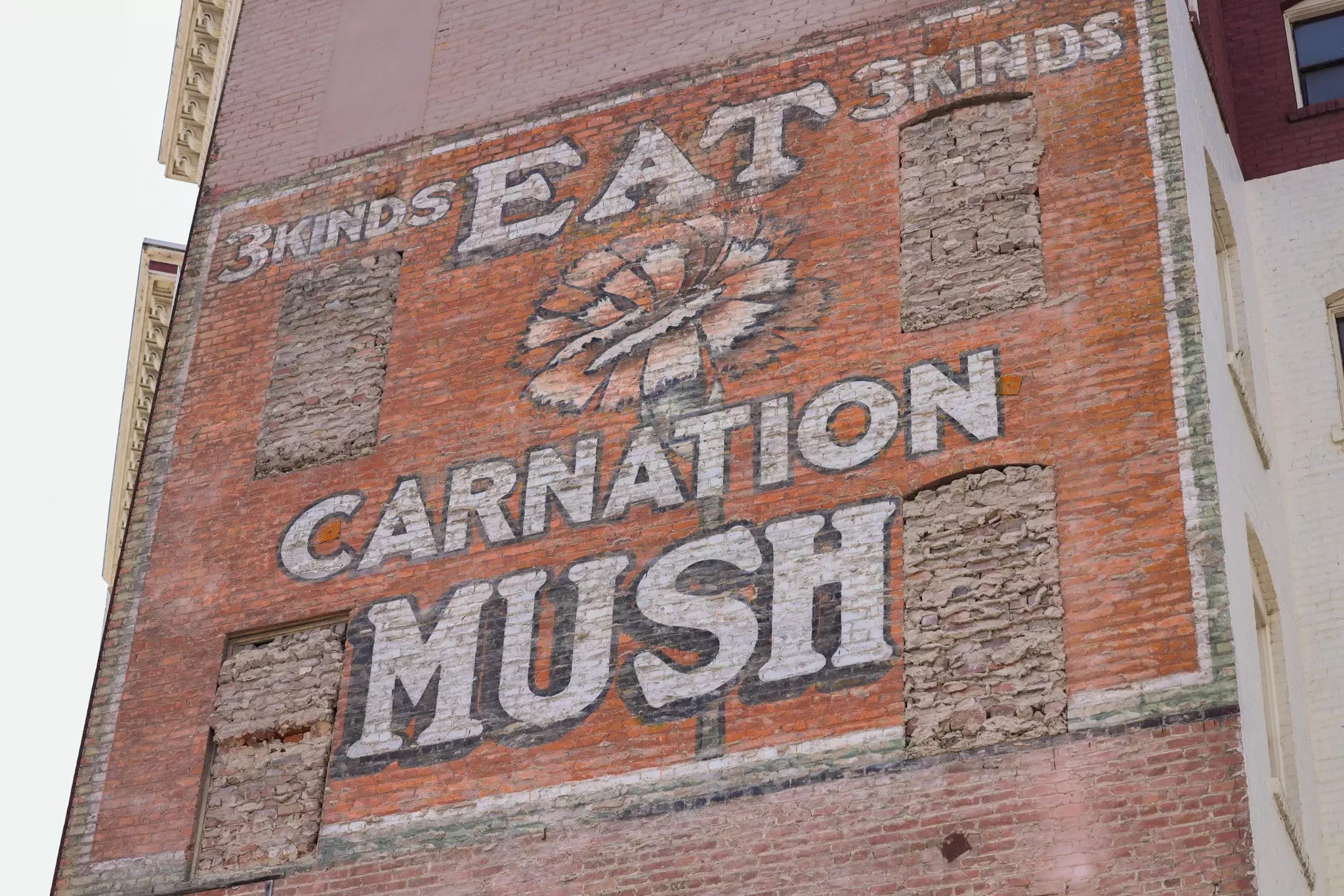
.Near my old office in downtown San Francisco, there was a hand-painted advertisement that had spent almost a century hidden behind another building. When the neighboring warehouse was demolished, the mural emerged into daylight again, urging passersby to try a forgotten breakfast food called Carnation Mush.
I'd walked past it hundreds of times without really seeing it. Only after Pokémon Go turned it into a Gym did I stop, look up, and wonder what "Carnation Mush" had been. Between battles with the overpowered Snorlaxes and Vaporeons rival players had stationed there, I found myself Googling the mural's history.
As I played, I learned more and more about the streets and walked and biked every day.
I snagged a potion at a PokéStop in front of a Ukrainian Orthodox church, and wondered how I had failed to ever notice this building with the gleaming golden dome before.

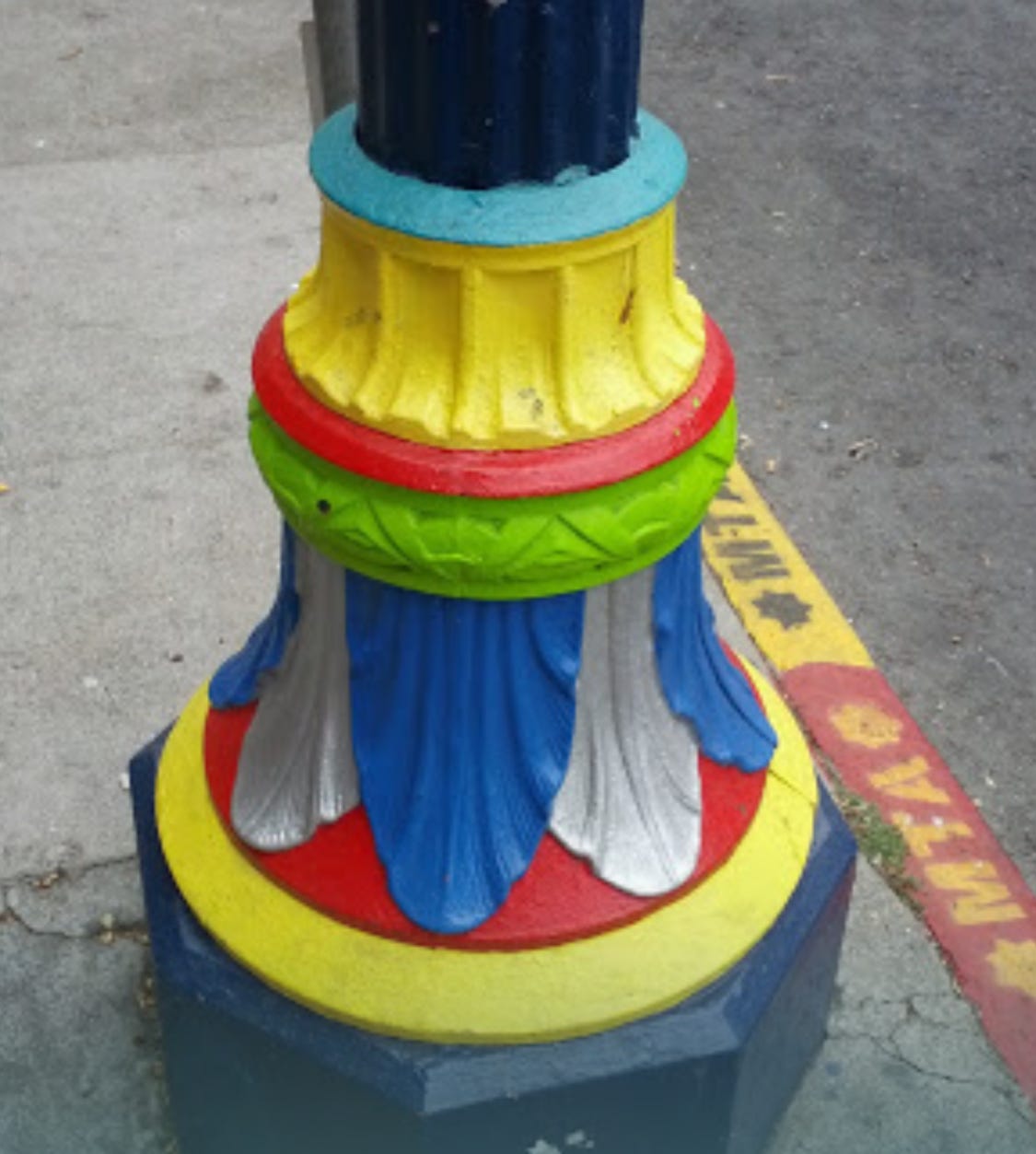
I wandered to another PokéStop at a brightly painted lamppost, and marveled at its artistry while I got some Revive medicine.
I stopped to catch a Geodude outside a strange museum devoted to a man from Pasadena who believed he was the reincarnation of Buddha , and chatted with some other players who are also there to capture this Rock Pokémon.

Pokémon Go quietly retrained my attention. It annotated my surroundings. Every Gym became a history lesson. Every PokéStop became a rabbit hole.
But I also knew my experience wasn’t universal. The game rewarded dense, walkable neighborhoods like mine while leaving sprawling suburbs and rural communities with a much thinner play experience. The disparity wasn’t just about Pokémon Go—it was about the way we’d built America.
That’s what I explored in this Rolling Stone piece from July 2016, reprinted in full below.
WHY ‘POKEMON GO’ SUCKS IN THE SUBURBS
How much fun the game lets you have is entirely dependent on your real world surroundings. Why? Because America has lousy level design
by Chris Baker | JULY 21, 2016 | rollingstone.com
Ever since Pokémon Go conquered the zeitgeist, there’s been a strain of rosy tech utopianism running through much of the media coverage of it. This mobile app has got Americans on their feet and walking around! They’re exploring their surroundings and interacting with strangers like they’re Europeans or something! It’s reconnecting players with the world, and with each other!
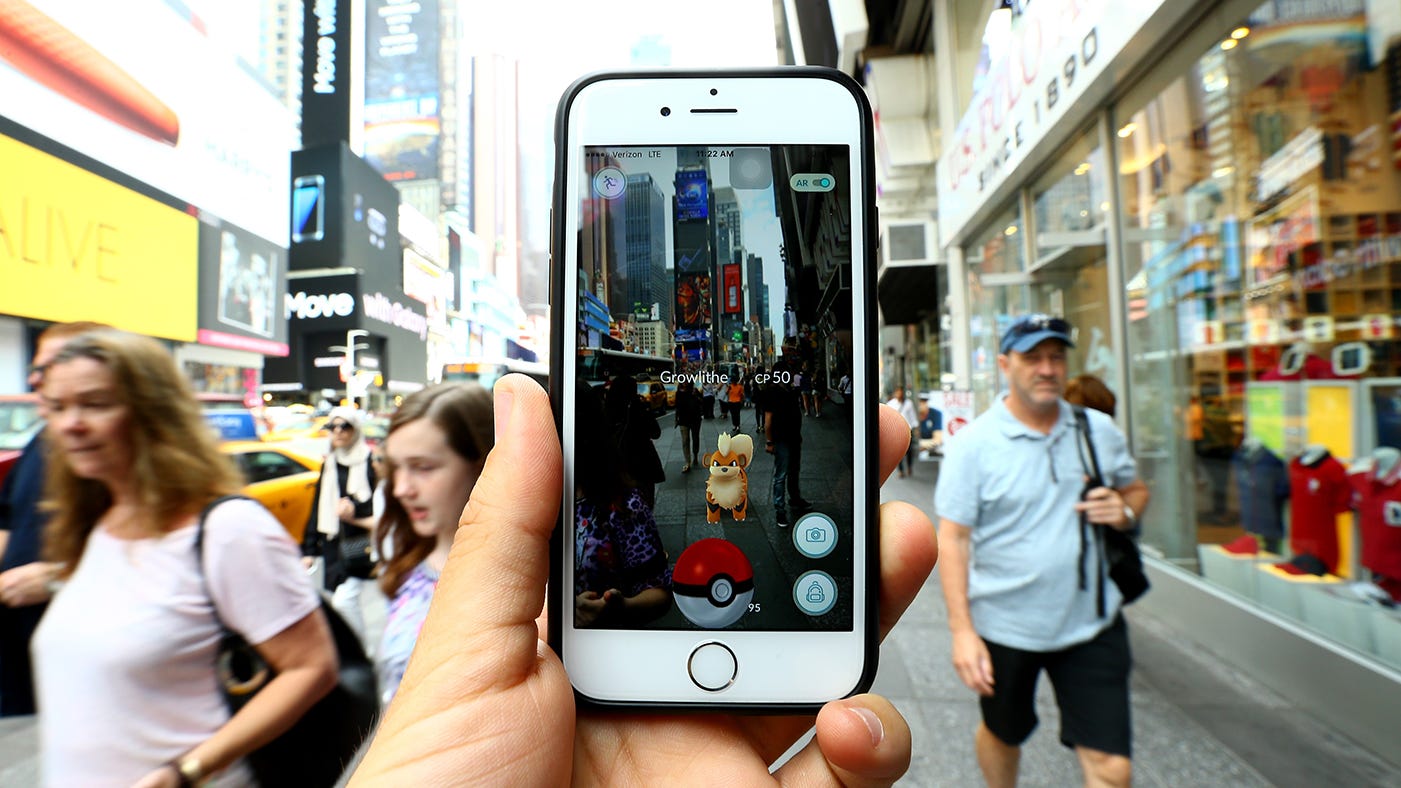
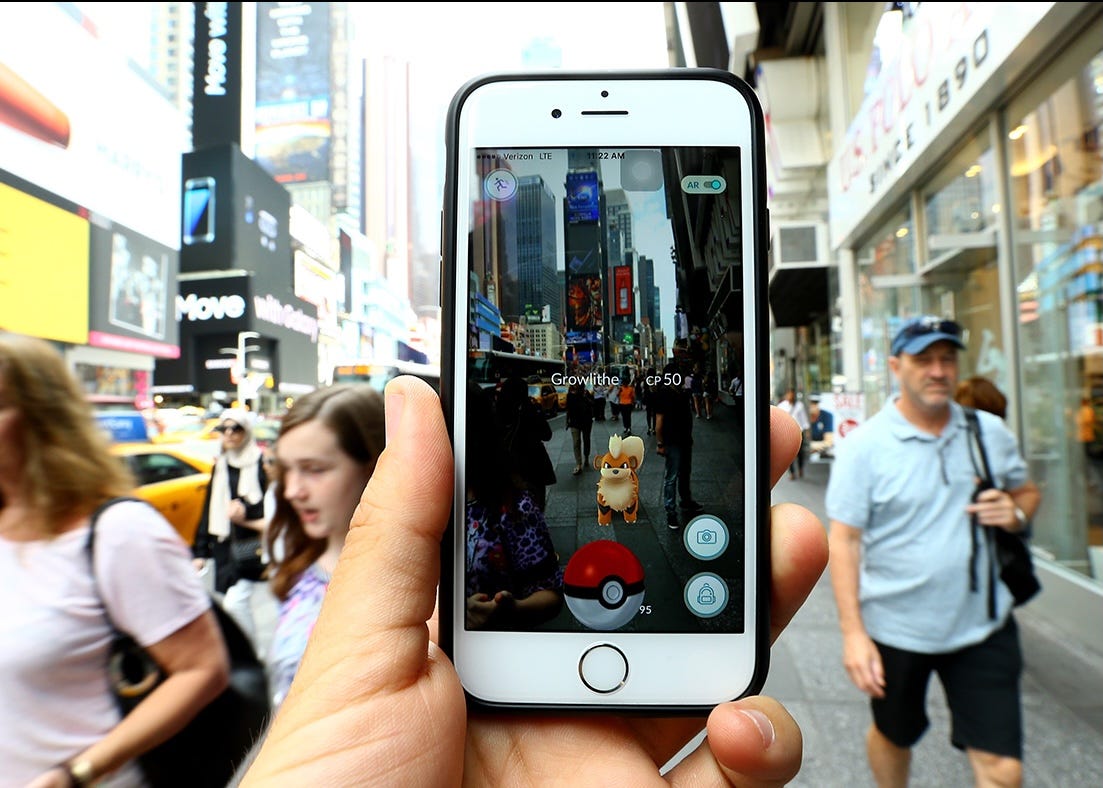
This sort of rhetoric, especially when it comes to tech, is usually just duplicitous bullshit that’s meant to sell you something or plunder your personal information. There are certainly legit privacy concerns about Pokémon Go, and the fact that I am sorely tempted to pay $39.99 in real world currency for 5,200 Pokécoins is deeply distressing to me. It’s also hard to shake the fact that I’m having a relatively rarefied experience with Pokémon Go simply due to where I live – that if my address were in the suburbs as opposed to one of the densest zip codes in the country, I may not be enjoying it much at all.
Pokémon Go is about discovery, both in the real world and in the augmented reality (or “AR”) overlay of the real world in which the game takes place. And as is obvious by now, there simply is more to discover in dense, urban areas. I thought I knew my neighborhood in downtown San Francisco well. But in the course of playing, I have stumbled upon strange pieces of street art, tiny parks, unusual museums, and hundred-year-old advertising murals that I never noticed before. It’s an embarrassment of riches in game terms when it comes to Pokémon Go.
“We spent some time thinking about what kinds of locations should be at the core of a game that’s designed to get you outside and moving around,” says Niantic Labs CEO John Hanke. “We really thought that it would be most interesting to build that around places that had some cultural attribute.”
Traditionally, when we see people out and about with their faces buried in their phones, we think of them as being sealed off from their surroundings by a hermetic bubble of data. But Pokémon Go, and the avalanche of location-based AR apps that may follow, have the potential to turn that bubble into a window. Maybe this game really can nudge our collective national behaviors in a different direction.
James Sinclair, who runs a blog dedicated to issues of urban planning and transportation called Stop and Move, is impressed with Pokémon Go‘s potential. “Many organizations and local governments have invested heavily in promoting walkability, and getting people to learn about their neighborhoods and their neighbors,” he says. “And this game has accomplished that so quickly.”


Just as Pokémon Go is the result of an ambitious partnership between Nintendo, The Pokémon Company, and Niantic Labs, it’s also the result of an ambitious collaboration between Niantic and the people who play its games. There are millions of PokéStops and gyms around the world, each of which is anchored to some local point of interest.
These points of interest were mostly created by players of Niantic’s previous game Ingress. “We spent some time thinking about what kinds of locations should be at the core of a game that’s designed to get you outside and moving around,” says Niantic Labs CEO John Hanke. “We really thought that it would be most interesting to build that around places that had some cultural attribute. A place that if you wandered up to it, you would be happy that you did. You would learn something new, you would see something cool or interesting to you.”
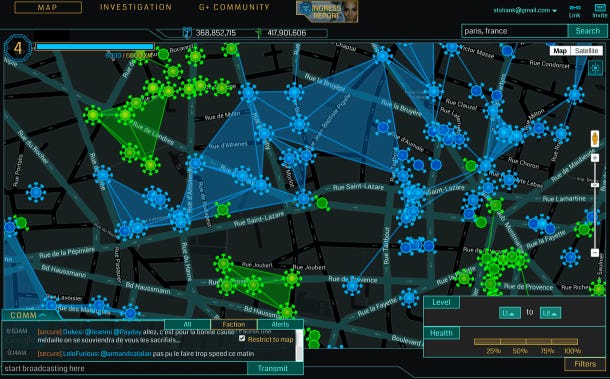
He points out that Yelp or Google Maps will give you an exhaustive rundown of area shops and business, but not all of the culturally interesting locales. “The statue in the park with the benches around it, that wasn’t really mapped in any systematic way,” he says. “We initially seeded the data set with some historical markers and public artwork, and then we set up a system within Ingress so that users could submit new locations to us. So it’s crowd-sourced, but then filtered on our side to get the good stuff from all the stuff that was submitted.”
“Gaming and urban redesign are not the same thing, but they’re related; they incentivize one another,” says Geoff Manaugh. “One of the things that has really drawn people to cities throughout Western history has been surprise, juxtaposition and adjacency.”
Ingress has well over a million players, a figure that seemed quite impressive before Pokémon Go came along. The points of interest that Ingress players had photographed and geotagged were imported directly into Pokémon Go. It’s sort of staggering how many tags there are. However, there’s no denying that our bold location-based AR future is unevenly distributed at present.
There were naturally far more Ingress players in densely populated big cities, where there are plenty of points of interest for them to tag. I live in a dense downtown, and whenever I log into the game, I see a half dozen Pokémon Gyms, and hundreds of PokéStops where I can pick up tools and power-ups to aid me in the game. But not every locale has the critical mass of content that I’ve been enjoying.
In a recent blog post, Sinclair noted that the fun factor of the game is highly dependent on your real world surroundings. “The game experience is entirely different between those who live in dense, urban areas with tight street networks and scores of points of interest, and those who don’t,” he says. “You don’t need a Manhattan-style grid to enjoy Pokémon Go, but you do need some density if you want to have any fun.”
If you visit forums like the Pokémon Go subreddit, you’ll see people who live in suburban sprawls or rural areas commiserating about how their area is a PokéStop desert, and their gyms are uncontested. “Closest PokéStop is five miles up the road,” bemoans one redditor. “Almost 30 miles from any Pokémon, PokéStops or Gyms,” writes another. “Not everyone lives in or even near a city.”
One way to look at this is that it’s a design flaw of the real world, not of the game. America itself has bad level design. Many urban theorists argue that the features that make cities vibrant are the same sort of features that would make a game like Pokémon Go particularly fun to play in cities.
“Gaming and urban redesign are not the same thing, but they’re related; they incentivize one another,” says Geoff Manaugh, architecture writer and author of the book A Burglar’s Guide to the City. “One of the things that has really drawn people to cities throughout Western history has been surprise, juxtaposition and adjacency. Rural and or suburban environments tend to be almost the opposite. They try to control landscape, and control the experiences you might have there. People move there specifically for a Groundhog Day experience.”

Another way to look at this is that most of the country is – once again – being left out in the cold by the urban elites. The game was built by a San Francisco developer, and its world was populated by geeky tech-savvy people who tend to congregate in urban areas and college towns. Just as the economic recovery from the Great Recession hasn’t been felt as much by people outside of major metropolitan areas, Pokémon Go players in other areas don’t get the same experience. (There have even been reports of virtual redlining, with a dearth of Pokémon Go locations in black communities.)
The challenge for Niantic Labs and Nintendo going forward is not just to build out the game by making it more robust and less buggy. They have to make the density of the game more uniform. Last Thursday, the developer created a form that allowed players to petition for new PokéStops and gyms, but it was taken down soon after it appeared.
Hanke insists that he wants players outside of major metropolises to have a good experience too. “I grew up in a small Texas town of a thousand people,” he says. “It had one blinking stoplight, but it did have a library, it had a small museum, it had some murals painted on the sides of buildings, it had some public artwork in front of city hall. There are a number of places that are portals and PokéStops in that community and that’s true of most small communities around the world at this point. No doubt there are places where people might wish the density was higher, but it is something that we’ve been thinking about for a long time.”
ELSEWHERE:
Niantic released location-based games tied to franchises like Harry Potter, Monster Hunter, and Pikmin, but was never able to recapture the success of Pokémon Go. It sold off its video game arm to mobile game company Scopely in 2025. It’s now focused on AR tech and geospatial AI.
Scopely is still actively supporting the Pokemon Go player community. Joseph Mangano wrote about a recent Pokémon GO Fest: Global on his Substack The PoGo Journal.
Great news! Thanks to location spoofers, you don’t have to go outside to enjoy this location-based game! Apple World Today has a recommendation: “If you’re looking for a trusted way to move in Pokémon GO without walking, TunesKit Location Changer stands out as a reliable solution. This powerful tool helps you simulate movement, teleport to any location, and use a joystick for real-time control, making it the best spoofer for Pokémon GO for both beginners and advanced users.”
Geoff Manaugh has a Substack called Endnotes, where he wrote about the Palisades Fire. He also blogs at BLDGBLOG. His short story Ernest was adapted as a feature film We Have a Ghost, which you can watch on Netflix.
Rebekah Vesper shared poetic nostalgia for 2016 called “Pokemon Go Summer.”
Matt Austerklein writes about religion and augmented reality. “As I got to know our world through the prism of Pokémon GO, it struck me that its unseen reality was not unlike the dynamic world of Jewish mysticism. Kabbalah includes its own soaring strata of angels, demons, and kelippot — the evil forces which imprison the divine light within us.”