

You've Never Seen the Best Adaptation of Dune
Sorry, Villeneuve and David Lynch. This version wins even though it never made it past pre-production

Everyone is talking about the next installment in Denis Villeneuve’s Dune films. But the most ambitious—and arguably best—adaptation of Frank Herbert’s Dune never made it past pre-production.
That version was a unique collaboration between the artists behind the original “Acid Western,” as well as Alien, Citizen Kane, Dark Star, and Airtight Garage. Salvador Dali, Mick Jagger, and Pink Floyd were also involved. This ambitious blockbuster was easily the most innovative sci-fi work ever filmed … or it would have been, if it had ever been filmed.
Cult director Alejandro Jodorowsky’s 1970s adaptation of the novel Dune collapsed under the weight of its own ambitions before it got off the drawing board. But the sketchy outline that survives, which was lovingly presented in the 2013 documentary Jodorowsky’s Dune, captures the imagination in ways that few finished works of science fiction manage.
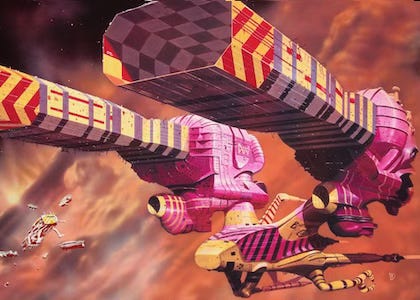
Frank Herbert’s best-selling 1965 novel Dune seemed at first glance to be unfilmable. It delves into the complexities of a distant desert planet’s ecology, bureaucracy, and religion, culminating in a war to control a resource called “melange” that is simultaneously a fuel for interstellar travel and a consciousness-expanding drug. Oh, and the characters ride around on sandworms that are thousands of feet long.
Only a lunatic would dare to try turning that dense, weird tale into a movie. (Especially in the pre-Star Wars era, before there were any big budget special f/x-driven blockbusters set on alien worlds with their own convoluted religions and technologies and warring factions.)
So yes—only a lunatic would dare to adapt Dune. No one should’ve been surprised when Jodorowsky optioned the book in 1973, because he was (and is!) a lunatic. The shamanistic Chilean director had made the film El Topo (1970), which is credited with creating the “acid Western” subgenre. The film was brutally violent, mystical, and often nonsensical. It was also a surprise hit.
The film had a profound impact on other filmmakers like Sam Fuller, Nicolas Winding Refn, and David Lynch. It even crossed into other media: Goichi Suda claimed it was the inspiration for his game No More Heroes, which became a divisive cult hit in its own right. Roger Ebert was an early champion of the film. “Jodorowsky dazzles us with such delicate mythological footwork that the violence becomes distanced, somehow, and we accept it like the slaughters in the Old Testament,” writes Ebert.
He followed with the surreal and psychedelic spiritual allegory Holy Mountain (1973), which was produced by Beatles manager Allan Klein and backed by John Lennon and Yoko Ono. Jodorowsky administered psilocybin mushrooms to the actors on set to ensure that they were in the proper frame of mind to help realize his vision.
The film didn’t receive a wide release until decades later, but it caused a stir at Cannes, and cemented Jodorowsky’s reputation as a fearless and transgressive visionary. “A plumply overripe fruit of the counterculture, dripping with the juices of spiritual rebellion, semi-comic posturing, consciousness-raising and all-around freakiness,” writes Peter Bradshaw in a retrospective Guardian review. “Hardly a moment passes in this movie without a situationist display of outrageousness.”
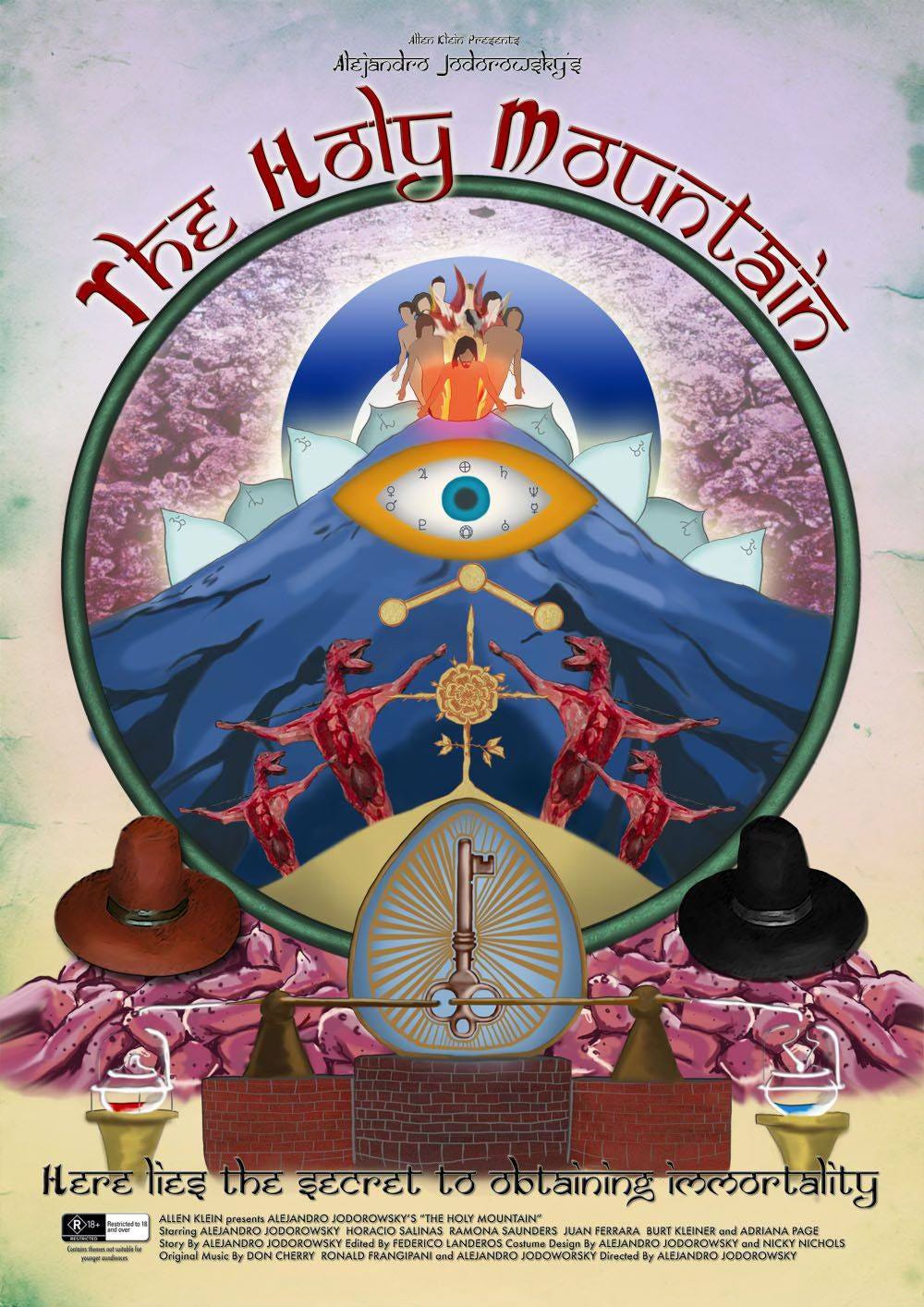
Jodorowsky moved on to his next challenge: adapting Frank Herbert’s novel. Like Tolkien or Manson, the book had already amassed a huge and devoted following of zealous young fans. In the 2013 documentary, the director, who was 84 at the time of filming, proclaims that he wanted his Dune to be the equivalent of an LSD trip that would “give a mutation to young minds.”
The director assembled a team of “spiritual warriors” to help realize his vision. Orson Welles, David Carradine, and Mick Jagger signed on to act. Pink Floyd would provide the soundtrack.
French comic book artist Jean “Moebius” Giraud storyboarded the voluminous screenplay, which changed the plot of the novel completely. (“I was raping Frank Herbert,” says Jodorowsky. “But with love.”)
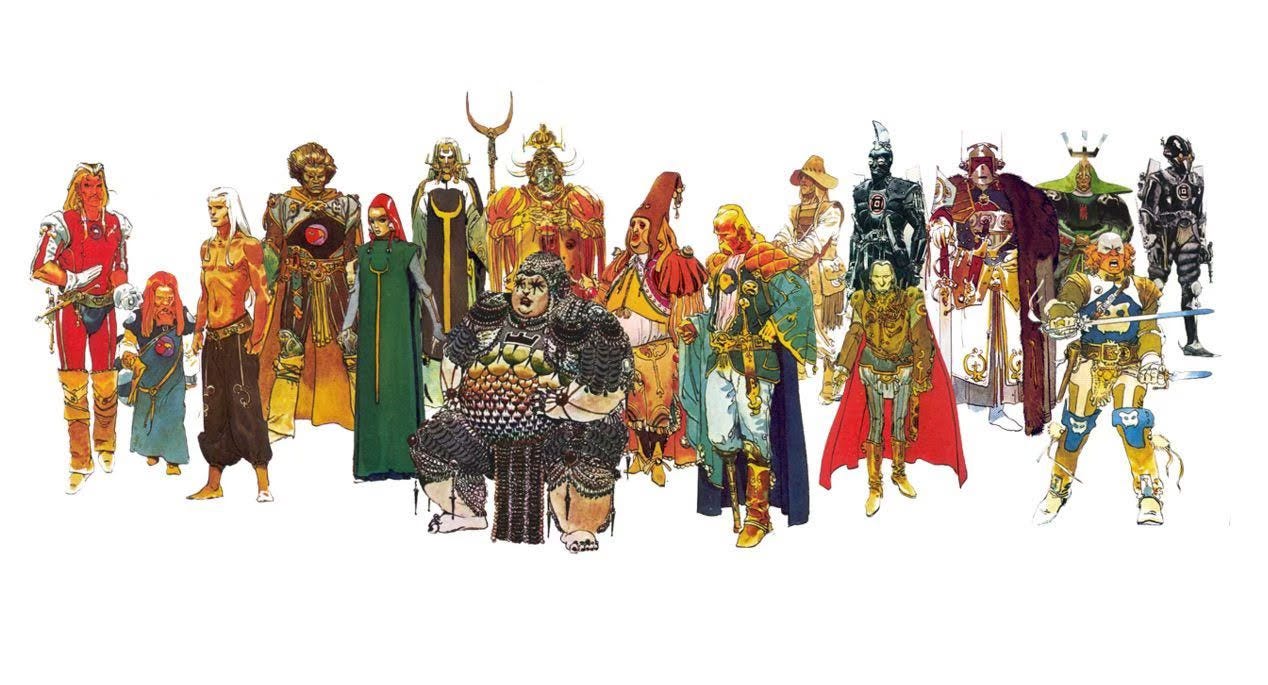
Most of what survives of the project is concept art, and it is astonishing. The costume designs by Giraud put the gaudiest finery of glam rock to shame.
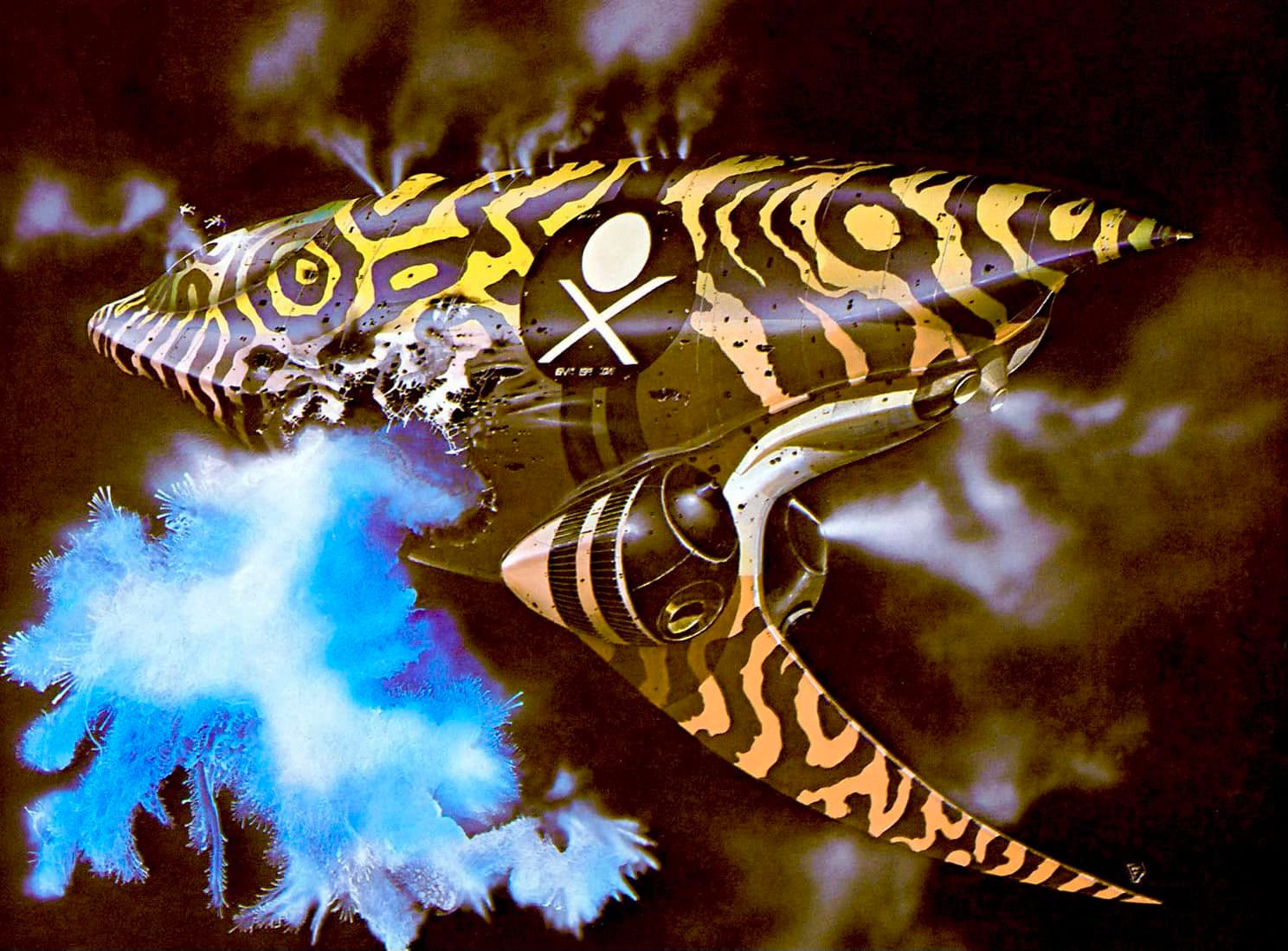
The spaceships, designed by sci-fi illustrator extraordinaire Chris Foss, resemble candy-colored tropical fish.
The architecture and structures look like the nightmarish visions of H. R. Giger. (Because it is: Jodorowsky tapped the artist years before his work on Alien.)


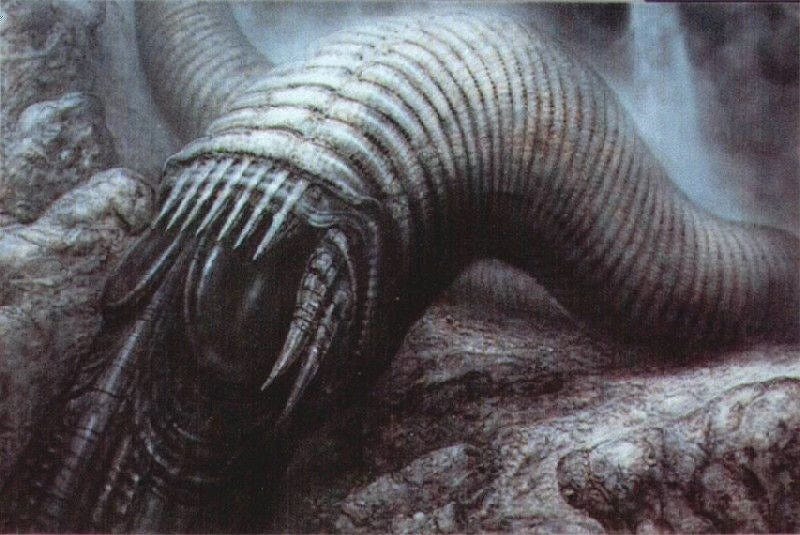
Giger’s conception of the sandworm is far more menacing than any other version I’ve seen.
But what really gives us the clearest sense of the scale of Jodorowsky’s vision are Giraud’s shot-by-shot storyboards of the entire film. Dan O’Bannon, who created the amazingly clever and resourceful effects for John Carpenter’s Dark Star, was tapped to make these images real. (O’Bannon would go on to write Alien, and help create Heavy Metal, Total Recall, and Return of the Living Dead.)
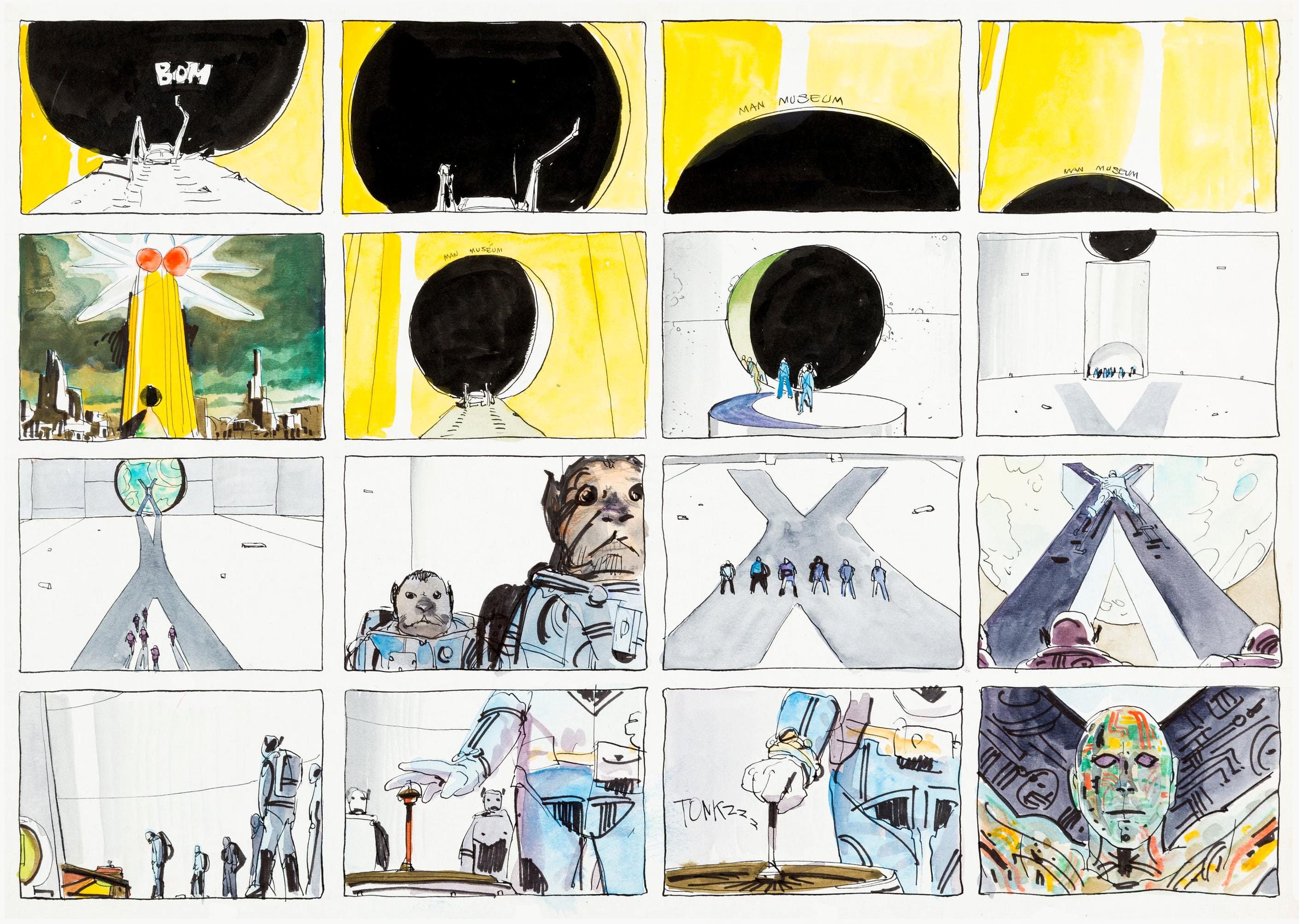
The documentary animates the storyboards to recreate several scenes from Jodorowsky's Dune. The opening sequence is a tracking shot longer and more ambitious than anything in Cuarón’s Gravity.
The project was shelved in 1975. The documentary doesn’t dwell too much on why Hollywood moneymen didn’t fund the actual production of the film, because—duh.
Jodorowsky had already burned through millions of dollars without a frame of footage to show for it, and had even agreed to pay Salvador Dali $100,000 per minute to appear in the film. The director did himself no favors when he answered concerns about the film’s length by thundering that he would make it 20 hours long, if need be.
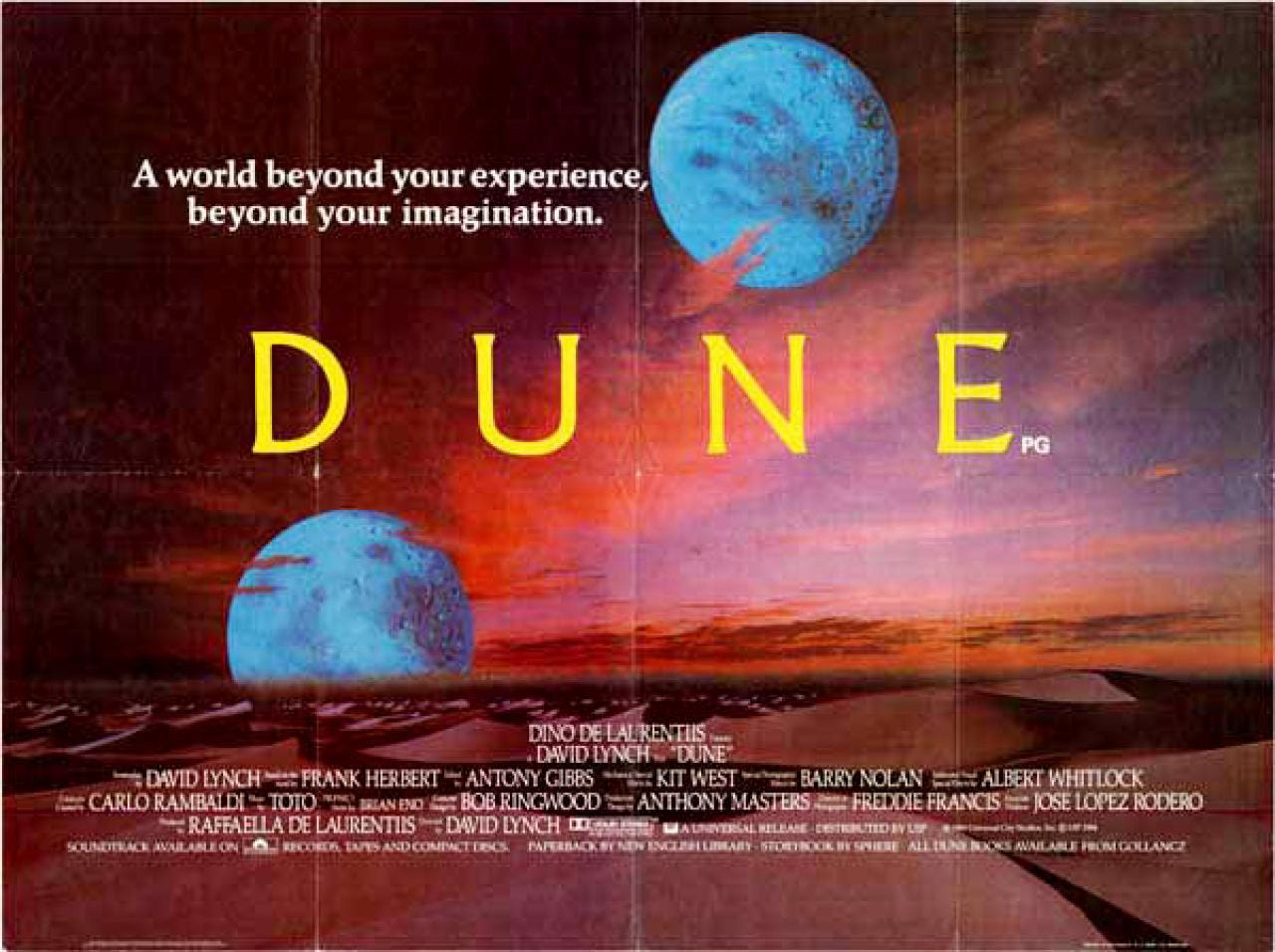
The 2013 documentary records Jodorowsky’s crushing disappointment when the wheels came off of the production. It also captures a hilarious moment of schadenfreude when the director recounts how his jealousy and despair gradually turned to delight as he watched David Lynch’s 1985 adaptation, which was a critical and commercial bomb. “It’s terrible!” he cackles.
Jodorowsky has since been dismissive of Villeneuve’s Dune adaptation.
“I saw the trailer. It’s very well done,” he said. “We can see that it is industrial cinema, that there is a lot of money, and that it was very expensive. But if it was very expensive, it must pay in proportion. And that is the problem: There [are] no surprises. The form is identical to what is done everywhere. The lighting, the acting, everything is predictable.”
Easy to dismiss that as sour grapes, but hard to argue that Jodorowsky’s version would have been anything but predictable.
The documentary makes you ache to see what the Chilean visionary might have created. But in the end, it seems perfectly fitting that the most mind-blowing sci-fi flick ever undertaken only exists in our imaginations. Watch it before you see Dune: Part Three.
ELSEWHERE:
The Jodorowsky Dune storyboard script, with stunning artwork by Jean Giraud, Chris Foss, and H.R. Giger, is available in its entirety here on the Internet Archive. If this article interests you at all, you will have a blast flipping through all 448 pages of it.


In a story as bizarre as anything Jodorowsky ever dreamed up, a bunch of crypto morons spent $3M to buy a physical copy of these Dune storyboards. They believed (falsely) that ownership would give them the rights to make their own series of NFTs and an animated film based on Jodorowsky and Giraud’s work, and on Herbert’s underlying book. Read a wrap-up of the whole ridiculous saga in this Esquire piece by Adrienne Westenfeld, and don’t stop before you read the jaw-dropping updates at the bottom.
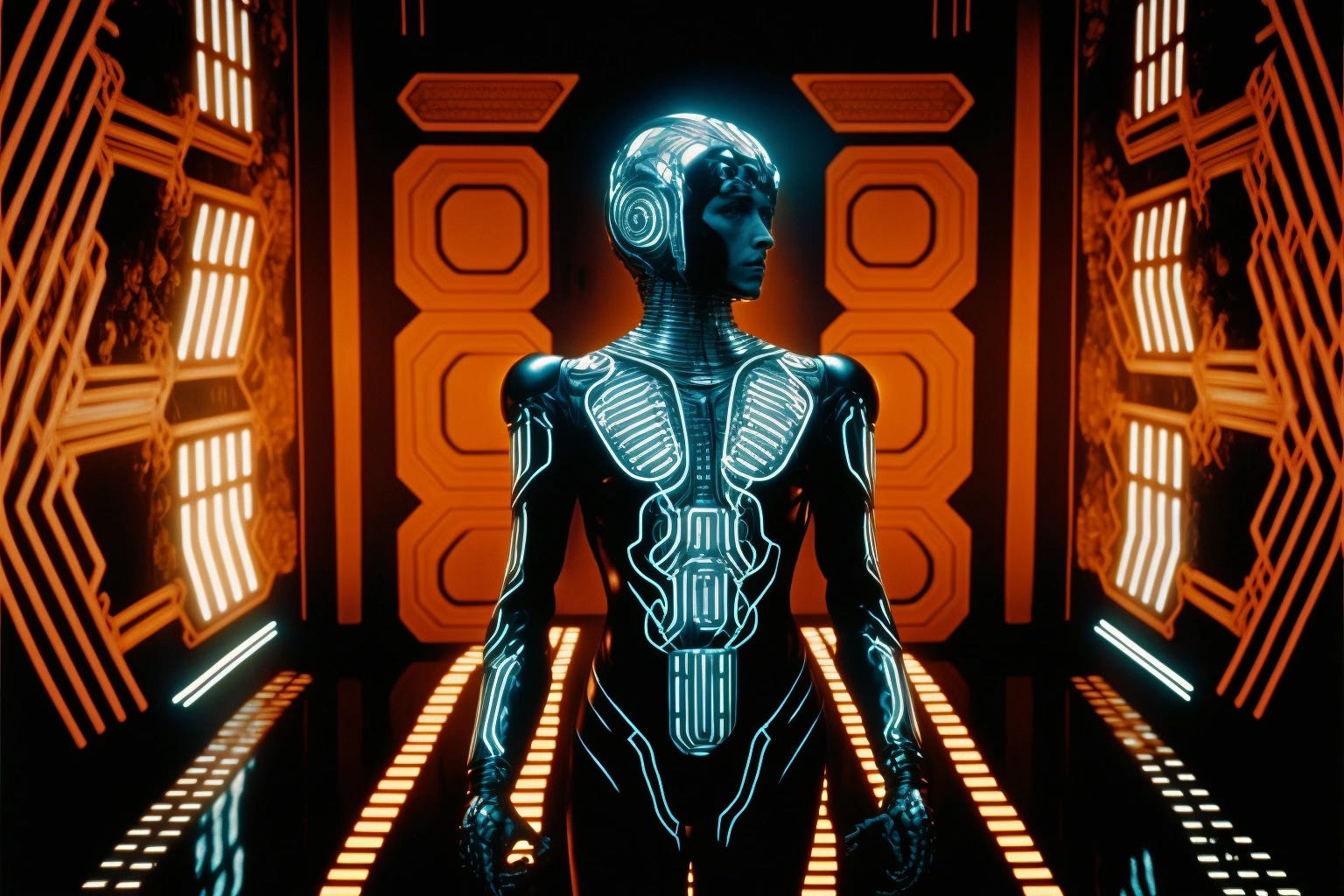
Frank Pavich, who directed the documentary Jodorowsky’s Dune, gave more of the backstory on the famous filmmaker’s abortive project in this 2023 New York Times piece. In that piece, he also asked Midjourney to conjure up images from the (nonexistent) 1976 Jodorowsky-directed version Tron. “To what extent do these rapidly generated images contain creativity? And from what source is that creativity emerging? Has Alejandro been robbed? Is the training of this A.I. model the greatest art heist in history? How much of art-making is theft, anyway?”
Jodorowsky and Jean “Moebius” Giraud would go on to work together on many graphic novel projects, including stories that the filmmaker had given up on realizing in cinematic form. Yanick Paquette has an appreciation of the pair’s magnum opus, The Incal, here on his site Yanick's Art News, as well as info on his follow-up work, made with Jodorowsky’s blessing. Mark Murphy wrote an interesting appreciation of Giraud that covers his collaborations with Jodorowsky here on Wondershtuff.
Holy Mountain is Jodorowsky’s most challenging work. Jim Laczkowski attempts to explain it here on Director's Club.
Blake Butler republishes a V Magazine interview with Jodorowsky at Dividual: “Art is not a business,” he says calmly, without a hint of question, “art is art. If you make money, fantastic. Money is not happiness but without money you are not happy. So then you do the work, and if you have money, fantastic, but if you make the work to have money, it’s like a dog dancing for a stick.”
Ross Simonini republishes an article from Art in America in which Jodorowsky recommends seven things he enjoys, including zen koans, Wittgenstein, Celtic harp music, and … feet?! (“I also put perfume on my feet to write. I spiritualize the feet. The hand can indicate and caress but the feet have the same sensibility as the hands.”) Read it at A Lie Before Its Time.
JACK MILLS recently posted the first installment of a lengthy interview with Jodorowsky pegged to the “monograph Art Sin Fin, a two volume, 1000+ page survey of his work in painting, comics, poetry, tarot and filmmaking, touching on his interests in Eastern Mysticism and Jungian philosophy.” Read it at Another Man's Obsessions Index.
Emma & Hanna of Kyle MacLachlan Fan Club mount a spirited defense of the David Lynch adaptation of Dune, with a focus on photos of the hot male stars of the film gussied up in stillsuits and other BDSM-inspired costume finery. Hard to argue with that.
I’m sorry but do you actually think this would have been any good? I don’t think there was the slightest chance: Jodorowsky had nothing but contempt for the book; he had demonstrated no mastery of visual effects or narrative cohesion whatsoever; all of those people working together would have been an epic mess on the scale of what happened to Star Trek The Motion Picture before the studio desperately hired Trumbull and Dykstra to pull 24-hours-a-day months’s long marathons to complete the vfx sequences that the previous people had dithered with but never completed (and that was Robert Wise, who was at least capable of thinking in terms of coherent movie sequences). It would have been like Bakshi’s Lord of the Rings except without the meager coherence and drive that movie had.
Weird movies, thy name is Alejandro Jodorowsky...